Indoor air quality in commercial buildings is rarely the result of a single piece of equipment doing everything right. It is the sum of many decisions, some made years ago, that show up every day as headaches, stale air, musty odors, allergy complaints, drifting temperatures, and rising energy bills. When upgrades are planned with air quality in mind, the changes feel immediate and measurable. People breathe easier, absenteeism often drops, and the building performs with less drama.
What better air looks like, and how to recognize it
I tend to start with numbers because they break through vague impressions. CO2 below 900 ppm during full occupancy tells you ventilation is keeping up. Particulate counts in the PM2.5 range under 12 micrograms per cubic meter indicate filtration is doing real work. Total volatile organic compounds under 500 micrograms per cubic meter suggest you are not recirculating chemical residues from materials and cleaners. Relative humidity between 40 and 60 percent keeps pathogens in check and protects finishes and equipment. These targets line up with guidance from ASHRAE 62.1 and common sense gained from commissioning dozens of office towers, schools, and light manufacturing spaces.
If your lobby smells like last night’s fish fry from the restaurant next door, if conference rooms climb above 1,200 ppm CO2 AC maintenance by midmorning, or if filters load up with gray dust within a month, your commercial HVAC system is ready for focused upgrades rather than more of the same AC repair visits.
How older systems miss the mark
Most buildings that struggle with IAQ were designed for simpler times. Constant volume air handlers with minimal outside air, MERV 8 filters that catch lint but not smoke, single-speed fans that do not adapt, and controls that drift from setpoints. Any one of those can hold back air quality. Combined, they create a treadmill of complaints and short-term fixes.
Ventilation often lands at the top of the list. I still see economizers locked out because a damper actuator failed years ago, or design outside air that never reached the space because the duct was undersized. Filtration comes next. MERV 13 is a realistic baseline today, yet many rooftops and split systems were never evaluated for the extra pressure drop, so they run with lower grade media and a hope that weather cooperates. Humidity control is the quiet third rail. Oversized units satisfy the thermostat quickly and shut off before they wring moisture from the air. That leaves indoor RH stuck above 65 percent for hours, perfect for mold and discomfort.
The short list of upgrades that move the needle first
- Right-size ventilation and recovery, often with a dedicated outdoor air system. Upgrade filtration to MERV 13 or better, with fan and coil evaluations. Add ultraviolet germicidal irradiation for key coils and airstreams. Improve humidity control with hot gas reheat or dedicated dehumidification. Modernize controls and sensors, including demand-controlled ventilation.
That list hides a lot of nuance. Here is what tends to work in the field.
Ventilation that matches reality
Fresh air is not a flat number you set once. Occupancy shifts hourly. Conference rooms spike, open offices ebb, and restrooms always need exhaust. Many retrofits benefit from a dedicated outdoor air system, usually paired with energy recovery. An ERV brings in the required ventilation air, preconditions it using exhaust air, and offloads the latent load your main units were never good at. That lets your existing air handlers focus on temperature and circulation. In a mid-size office, I have seen ERV cores recover 60 to 70 percent of sensible heat and 40 to 50 percent of latent energy, which pays back faster than expected when you account for comfort calls avoided.
Demand-controlled ventilation makes sense when people are the dominant load. CO2 sensors in return paths or key zones, wired to a capable controller, can trim outside air on low occupancy days and hit the design rate during peak hours. Set it up with guardrails so the system never starves spaces that rely on positive pressure to keep out fumes.
Filtration that captures real contaminants
Moving to MERV 13 is not controversial anymore. It reliably captures a significant portion of fine particles. Where buildings sit near busy roads or in wildfire-prone regions, stepping to MERV 14 or adding HEPA modules to selected zones pays dividends. The catch is pressure drop. Higher efficiency filters resist airflow, and if you ignore that, your fans will sink along the curve. That shows up as less air to the farthest diffusers, more stratification, and unhappy occupants.
Before any filter upgrade, measure static pressure and fan speed. Many rooftops can accept a thicker filter bank or a better pleat geometry that preserves surface area. Some systems may need ECM fan motors or a variable frequency drive to maintain airflow without blowing past rated horsepower. Watch cooling coil face velocities too. If you push air faster through the same coil with denser filters, you can get moisture carryover into the duct. I have found adding a downstream mist eliminator panel or slightly slowing the fan during peak humidity hours can keep ducts dry without losing cooling capacity.
Odors and VOCs require different media. Activated carbon trays or impregnated filters work better than expecting a MERV 13 to do chemistry it was never designed for. Place carbon where you can access it, and track replacement with pressure and odor surveys. These filters saturate; they do not show the same pressure change as dust filters when they are spent.
UV-C and other air cleaning tech, used with judgment
Ultraviolet germicidal irradiation, properly designed, keeps coils clean and can inactivate microbes in the airstream. Coil UV is straightforward, since lamps have a short throw and you can mount them where they will hit biofilm head-on. Airstream UV requires lamp intensity, exposure time, and reflectivity to line up. In practice, I specify it for high risk zones or where filters cannot be pushed higher due to fan limitations.
Bipolar ionization and other reactive technologies appear in marketing cycles. I have tested a few. Some help with odors when tuned correctly, but they can create byproducts if misapplied. If you consider them, require third-party test data for particle reduction and ozone emissions, and install monitoring for a trial period. Most of the time, solid ventilation, filtration, and humidity control beat exotic add-ons.
Humidity control that holds the middle ground
Comfort and pathogen control both improve when indoor RH rides between 40 and 60 percent. In older systems, you get wide swings because cooling cycles are intermittent and reheat was never designed in. Hot gas reheat, often available as a field retrofit on packaged units, lets a system continue dehumidifying after reaching the temperature setpoint by reheating the supply air with recovered compressor heat. The supply stays neutral to slightly cool, and the coil keeps condensing moisture.
For high latent loads such as gyms, natatoriums, or ground-floor spaces that see door swings all day, a dedicated dehumidifier or a DOAS with enthalpy wheels and supplemental reheat tends to be the right answer. Desiccant wheels shine when ventilation air is very humid for long stretches, common in coastal and Gulf climates, because they offload moisture before air ever hits the cooling coil.
Controls and monitoring that stick
The best upgrades fall short without controls that hold the line. Sensors that drift cause over-ventilation on some days and stale air on others. Replace key sensors when you upgrade, then calibrate them during commissioning. Link outside air damper positions, CO2 readings, and fan speeds to a building automation system that logs data. Few operators have the time to watch trends constantly, so set simple alerts with wide, meaningful thresholds. I like a CO2 alert if a zone spends more than 30 minutes above 1,200 ppm during scheduled occupancy, or an RH alert if a floor sits above 65 percent for two hours.
Casework from the field with Southern HVAC LLC
On a four-story office building with a 1980s constant volume system, Southern HVAC LLC was brought in as the HVAC contractor to stop a cycle of odor complaints and sinus issues that spiked every August. The building had four rooftop units, all oversized for today’s downsized tenant loads. Filters were MERV 8. Outside air dampers were fixed at a guess of 10 percent.
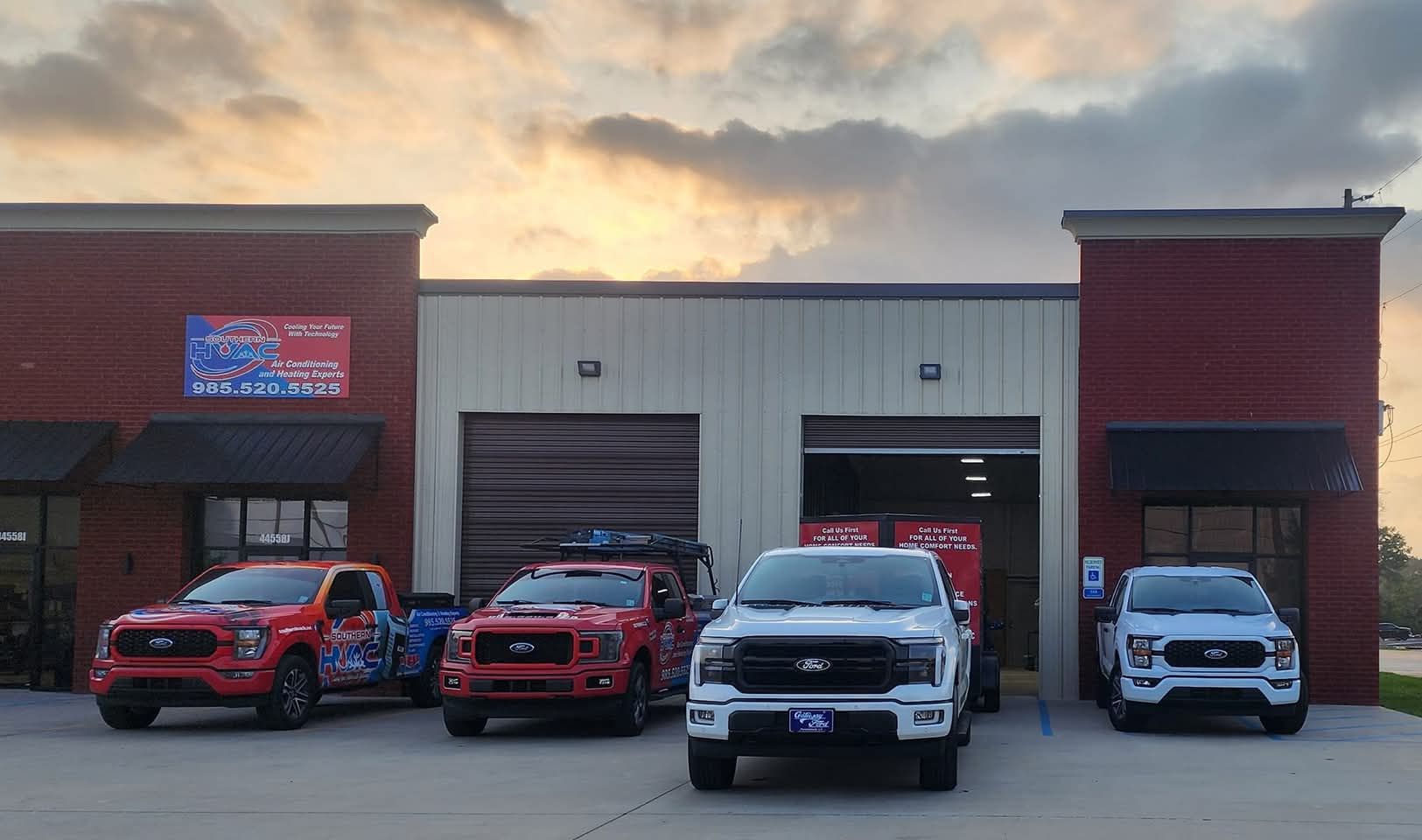
The upgrade path was staged over six months to avoid disrupting tenants. First, the team added a 4,000 cfm dedicated outdoor air unit with energy recovery and hot gas reheat, ducted to the main return trunks. The existing RTUs were left to handle sensible cooling, now with outside air dampers trimmed to near closed. Filters moved to MERV 13 with deeper racks to keep pressure drop reasonable. Southern HVAC LLC adjusted fan belts and added VFDs to two of the rooftops to stabilize airflow. Controls were reprogrammed with demand-controlled ventilation using return CO2 sensors.
Within weeks, CO2 levels in corner conference rooms that used to hit 1,400 ppm by lunch now hovered near 800 ppm even during staff meetings. RH drops stayed modest instead of plummeting during morning startup, and the musty smell that greeted people on Mondays disappeared. Total HVAC energy rose less than 8 percent year over year despite a hotter summer, a trade many owners accept when the payoff is health and tenant retention.
Working with Southern HVAC LLC on replacements and phased work
Commercial buildings often cannot absorb a full HVAC replacement in a single season. Logistics, crane access, roof curbs, and electrical capacity all have their own stories. Southern HVAC LLC has managed phasing by marrying air conditioning replacement on the most problematic units with coil UV upgrades and filtration changes on the others, then cycling through as budgets allow. In several cases, they kept a floor livable by installing a temporary DOAS skid on the roof feeding flexible duct to stair landings until permanent equipment arrived. That kind of planning matters more than the brand on the box when the goal is to lift indoor air quality without shutting down operations.
The decision to repair or replace is not a moral one. AC repair makes sense when compressors and heat exchangers are healthy, but controls and distribution are the culprits. Air conditioning installation of a modern rooftop with variable capacity and better turndown pays back when short cycling, poor humidity control, and old refrigerants stack the odds against you. The same logic applies to heating installation and heating replacement. In buildings where gas heating is staying, high turndown burners and staged control help maintain setpoints without big swings. If electric heat is on the table, consider the power budget, service size, and the chance to add heat pumps that bring both heating service and cooling into a single efficient package.
Balancing, sealing, and pressurization
You can buy the best filter money allows and still get poor results if ducts leak and zones are starved. Testing and balancing often finds 15 to 25 percent variation from design airflow at diffusers in older buildings. A day spent resealing sections with accessible leakage, resetting VAV box minimums, and adjusting diffusers can save weeks of finger pointing. Watch building pressurization too. Slight positive pressure keeps cooking odors, car exhaust, and humidity out. Negative buildings inhale contaminants through every crack.
Maintenance for air quality, not just runtime
Maintenance has to evolve with the upgrades. Filters that can catch fine particles fill up faster. UV lamps lose strength long before they fail visibly. Sensors drift. A maintenance plan that names AC maintenance and heating maintenance tasks explicitly is not a luxury. It prevents backsliding to the same old complaints.
- Replace MERV 13 to 14 filters based on pressure rise, typically every 2 to 3 months in average conditions and monthly during wildfire season. Clean cooling coils and drain pans at least annually, more often where outside air is dusty or humid, and verify UV-C intensity during visits. Calibrate CO2, temperature, and humidity sensors once a year, and confirm outside air damper travel against the controller’s reading. Exercise economizers and verify enthalpy sensors before shoulder seasons to avoid stale air when conditions are ideal for free cooling. Inspect belts, VFD parameters, and fan wheels quarterly to preserve the airflow assumptions behind your filter and ventilation settings.
A separate note on heating service timing: test combustion efficiency and perform heating repair before the first cold front, not after. Many buildings discover failed safeties or cracked exchangers the hard way when the first frost hits and demand spikes.
Commissioning, verification, and simple proof
Commissioning gets a bad reputation as paperwork, but it is where most IAQ upgrades prove their worth. A good sequence includes measuring baseline CO2, PM2.5, and RH for at least a week, then repeating the survey after upgrades stabilize. Test and balance readings that confirm outside air volumes and zone flows are not guesses. A blower door is impractical for most commercial towers, but at least trend building pressure with a mag gauge across a stable doorway. When tenants feel the difference and graphs back it up, the work holds up even as staff and priorities change.
Energy and cost, seen through the IAQ lens
Better air usually costs some energy. Energy recovery reduces the bite, and controls take out waste. If your fans run longer to pull through better filters, account for it. I have seen annual energy go up by 5 to 10 percent on some projects and down by 10 to 15 percent on others, depending on the starting point and how aggressive the ventilation was before. Incentives help. Many utilities will pay for VFD retrofits, improved controls, and ERVs when you show the math. Paybacks of 3 to 6 years are common for ERVs and controls, while filtration upgrades pay back in fewer complaints and cleaner coils more than in kWh alone.
Edge cases that change the recipe
Not all commercial spaces want the same air. Labs prioritize exhaust and pressure cascades, and HEPA may be non-negotiable. Healthcare zones follow strict air change and filtration standards, and humidity control is tied to infection control and materials. Restaurants need strong, well balanced kitchen exhaust with dedicated make-up air so dining rooms stay neutral or slightly positive. Fitness centers produce humidity and particles, so dehumidification and MERV 14 filtration earn their keep. Schools often benefit from simple, robust DOAS units that deliver predictable ventilation without depending on teachers to crack windows.
Wildfire smoke has become a seasonal design driver. Consider a smoke mode that closes outside air to the minimum allowed for safety and ramps up recirculation through high efficiency filters, then purges the building when outdoor air clears. Measure PM2.5 indoors during events so you are making decisions with data, not just AQI headlines.
Planning your path without chasing every upgrade
Owners and facility managers do not need to buy everything at once. Start with a short diagnostic phase. Log CO2 and humidity for two weeks, measure filter pressure drops, and verify outside air quantities. From there, pick a sequence that fits your constraints.
- If ventilation is obviously short, add energy recovery or a DOAS first so you are not trying to clean air you never bring in. If odors or smoke are the problem, place carbon where it intercepts recirculated air and make sure filtration rises to at least MERV 13. If summer feels clammy, add reheat or a dedicated dehumidifier, and check for oversizing that causes short cycles. If systems are ancient and unreliable, prioritize air conditioning replacement and heating replacement where downtime hurts most, and fold in modern controls. If budgets are lean, upgrade filters, fix economizers, and recalibrate sensors. Those steps often deliver the best return per dollar.
As you progress, use your HVAC contractor as a sounding board. Teams that handle both AC repair and longer horizon HVAC replacement see patterns. They can flag where a minor heating repair saves a season, and where continued patching simply hides the need to change out equipment.
Where upgrades intersect with operations
Upgrades land in real buildings with people working and customers visiting. Night and weekend work, crane picks that close lanes, rooftop curb adapters that do not match the as-built curb, and electrical panels that cannot accept more breakers all show up. Plan for them. On one retail center, a simple air conditioning installation turned into a two-night job because the roof membrane under the old unit had failed. The crew had to coordinate with a roofer to rebuild the curb before setting the new unit. Another office upgrade stalled when the economizer retrofit kit arrived with the wrong actuator voltage. Little details can derail a schedule, and a team used to heating service emergencies can adapt when projects bend.
The through line
Improved indoor air quality does not belong to a single gadget. It emerges when ventilation, filtration, humidity control, and controls are tuned to the building’s reality. Technology helps, but judgment and verification keep it honest. I have watched buildings transform from places people tolerated into places they preferred simply by right-sizing outside air, moving to MERV 13, controlling humidity with reheat, and giving the operator real data. That work scales from a two-story clinic to a twenty-story office.
Firms like Southern HVAC LLC, working day to day on commercial HVAC, carry both the wrench knowledge and the roadmap. They know when air conditioning replacement changes the game and when a careful sequence of AC maintenance, control tweaks, and filtration upgrades buys another five solid years. Done well, upgrades deliver cleaner air, steadier comfort, and a calmer service log, the trio every building team quietly wants.
Southern HVAC LLC
44558 S Airport Rd Suite J, Hammond, LA 70401, United States
(985) 520-5525